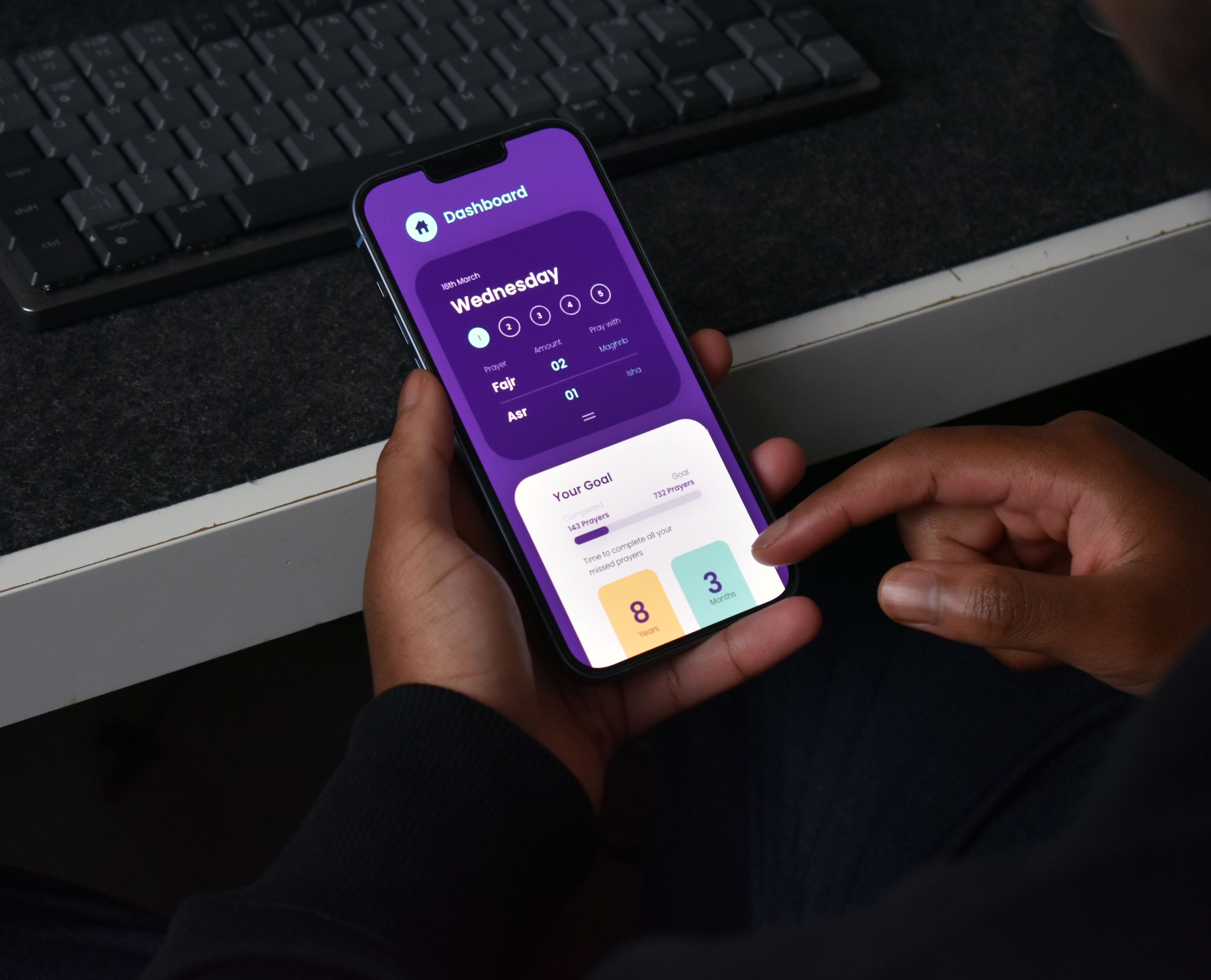
Making daily prayer more personal and accessible
Product Design
Project Duration
3 months
About the project
An app helping second-generation Muslims track and catch up on missed prayers through gamification and social accountability.
Who for
Catch up Salah, a company on a mission to help individuals manage their spiritual life whilst living in the west
My Role
Product Designer, UX Researcher, Workshop Facilitator
Collaboration
App developers and stakeholders
The Problem
Many Muslims have a backlog of missed prayers, known as Qada, but no clear or motivating way to track and catch up on them. Existing tools focus on daily prayer times but ignore the emotional weight and practical challenge of making up what has been missed.
Discovery
Process & Approach
Understanding core issues through participatory workshops
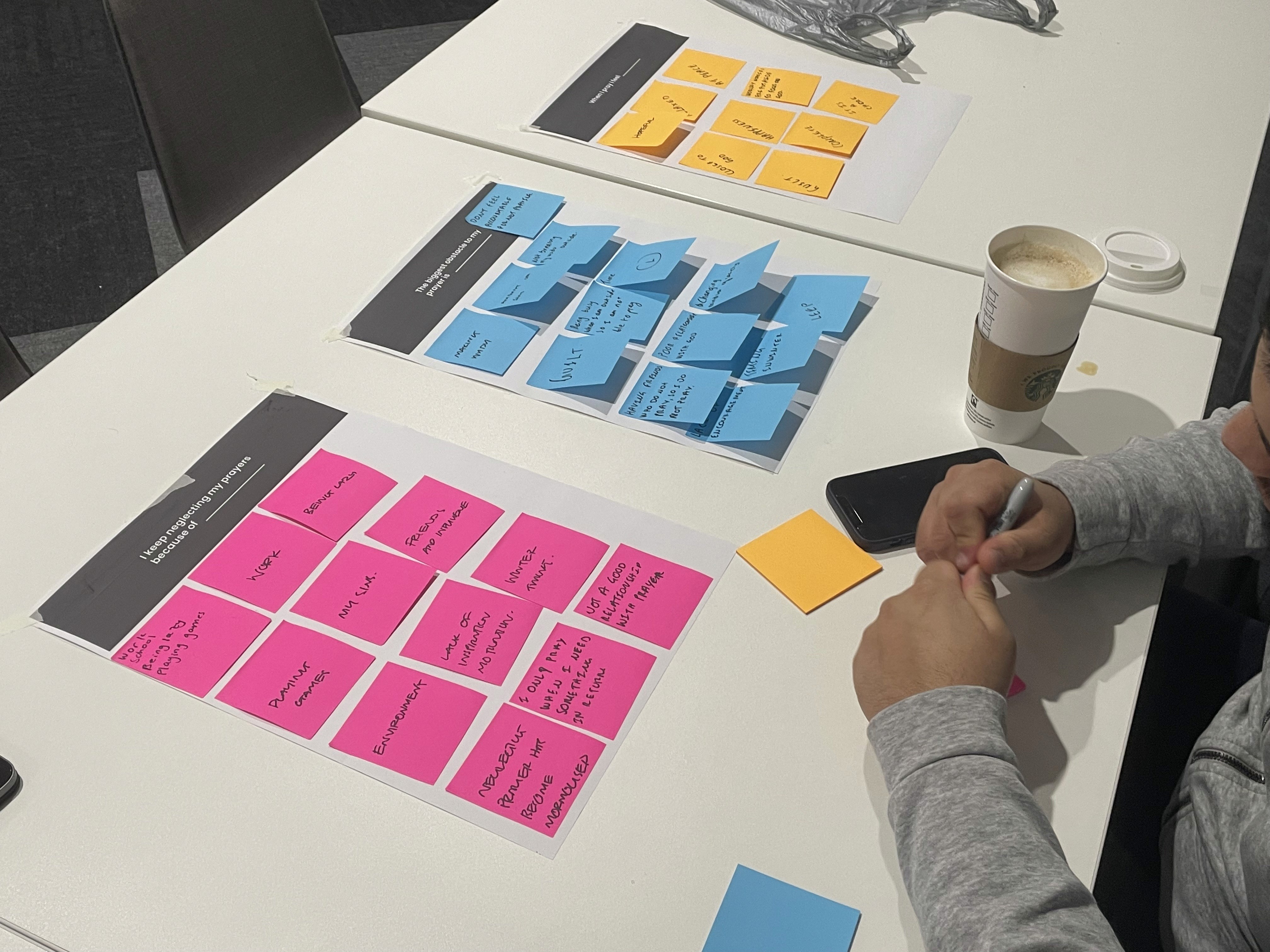
We ran two participatory workshops with users and consulted Islamic scholars to understand the root causes of missed prayers. The first workshop surfaced emotional and practical barriers through sentence completion prompts.
Co-creation techniques with users to visualise the final solution
The second invited users to co-generate ideas based on those insights, giving them ownership over the direction. Alongside this we conducted market research to assess how existing tools approached the same challenge.
Define
Understanding why prayers get missed
"I feel as if I am struggling alone sometimes"
Feel overwhelmed by amount of prayers needing completed
Many users we researched with told us that even though they could easily calculate how many prayers they had missed, they still felt overwhelmed by it. This was directly tied to feeling alone and not having others around them for support.
Lack of encouragement and lack of community around them
The people we spoke to weren't struggling with knowledge or intention. They knew they had missed prayers and they wanted to catch up. What was missing was a sense of accountability and people around them going through the same thing.
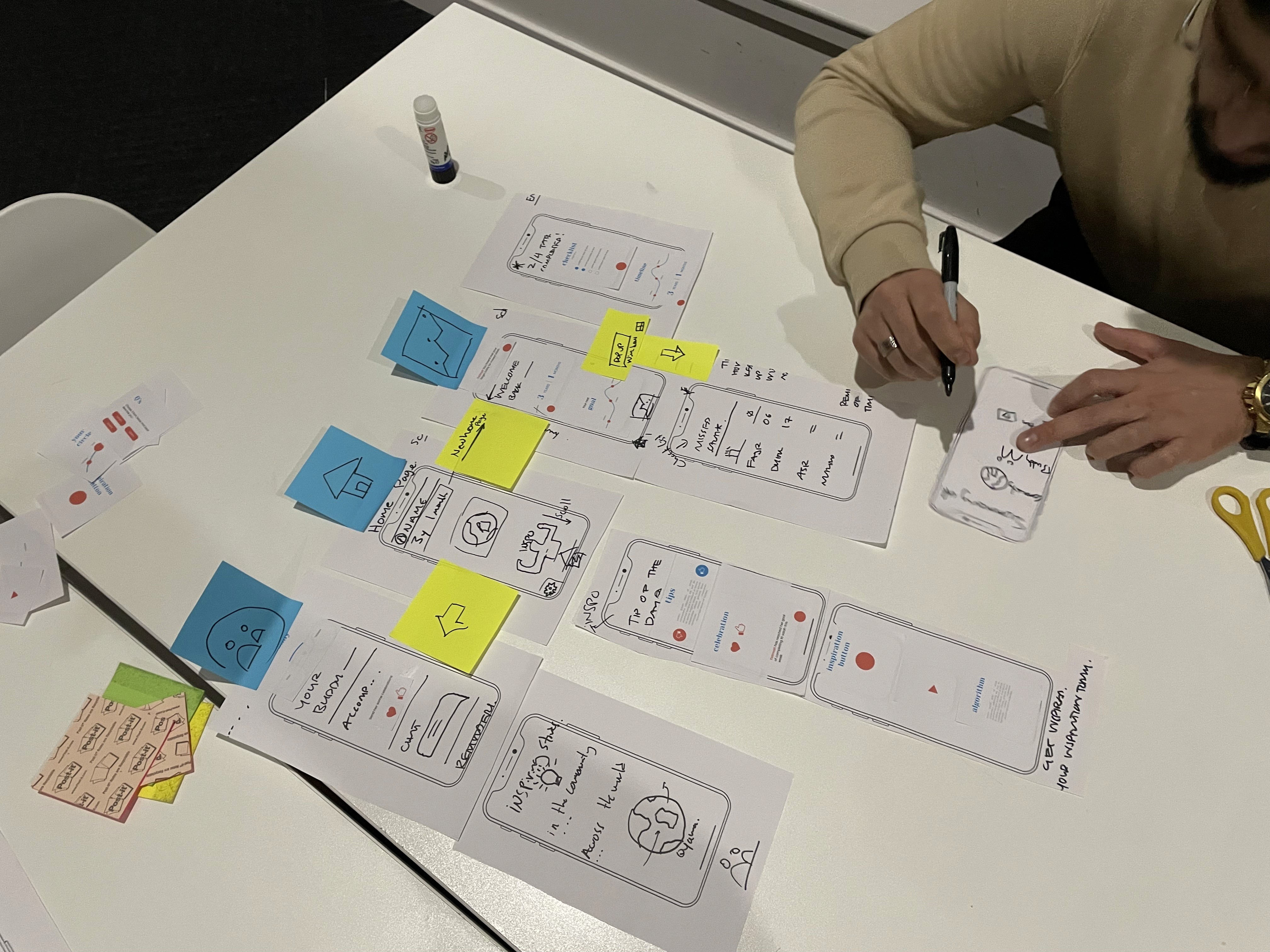
Develop
Mapping out the value propositions against the user journeys
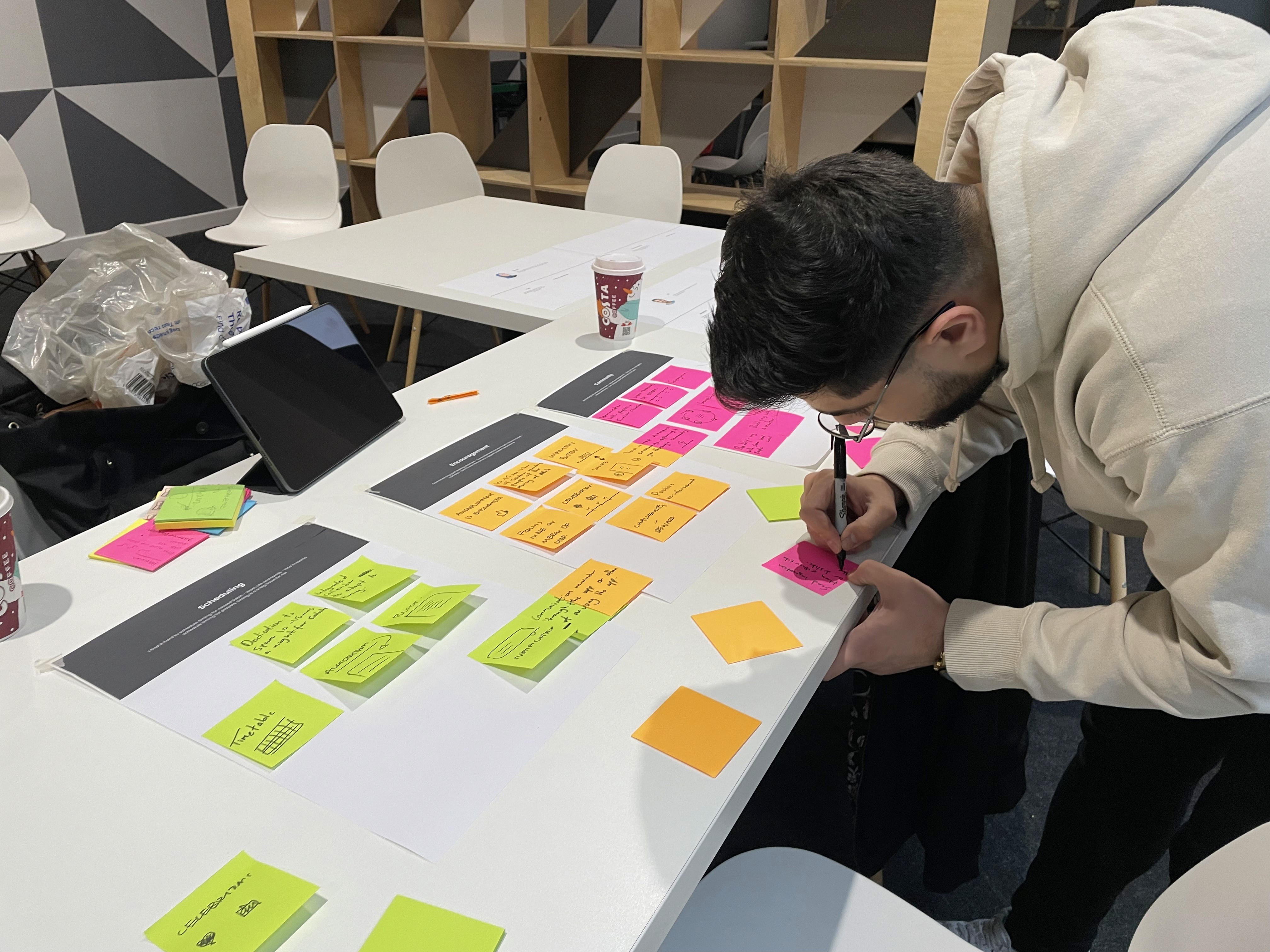
Using digital artefacts, co-created the value proposition on the user journey
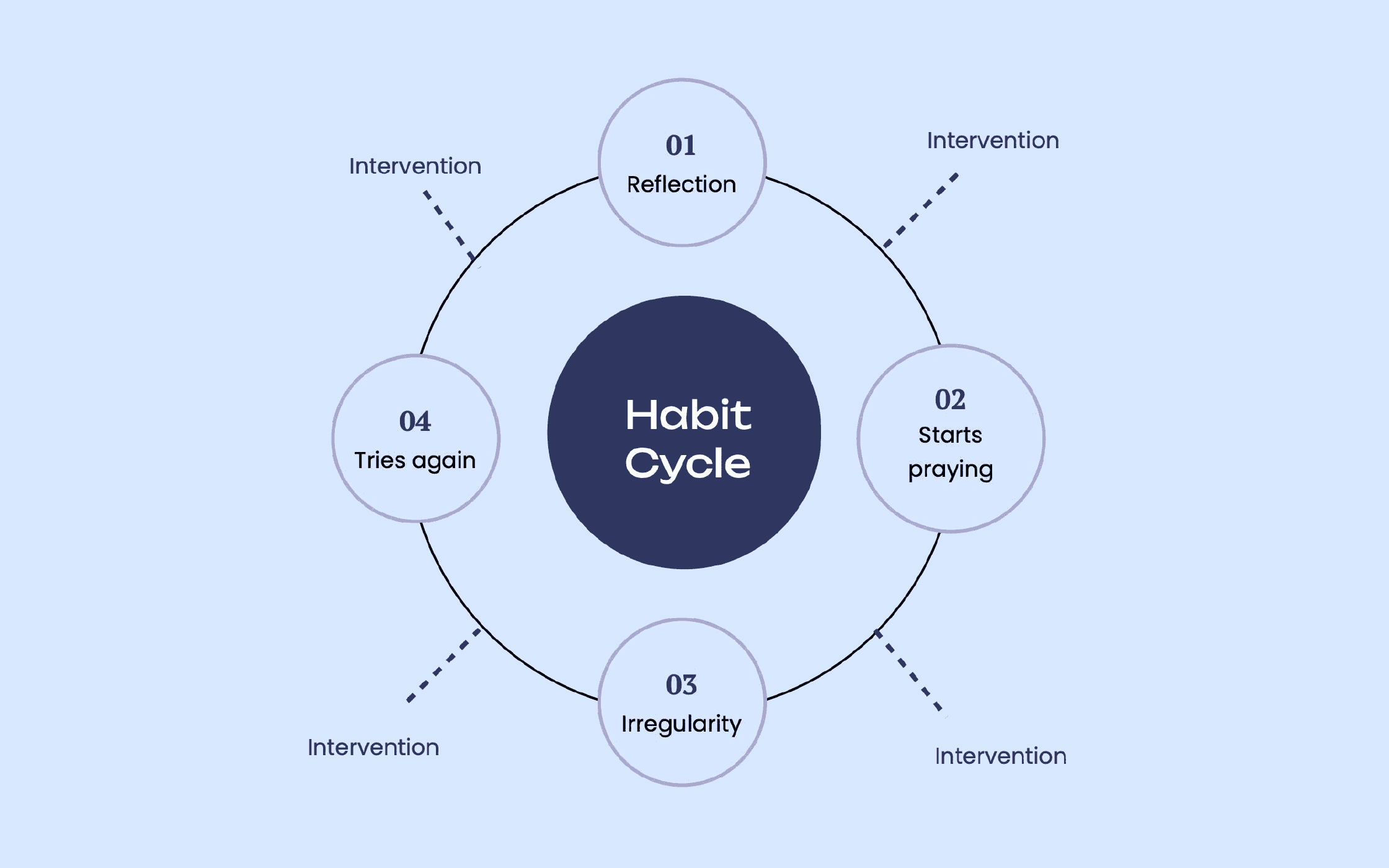
We conducted another round of workshop to better understand how the value propositions fitted into the user journey and the user life cycle. We identified the key moments where the user would benefit from the app.
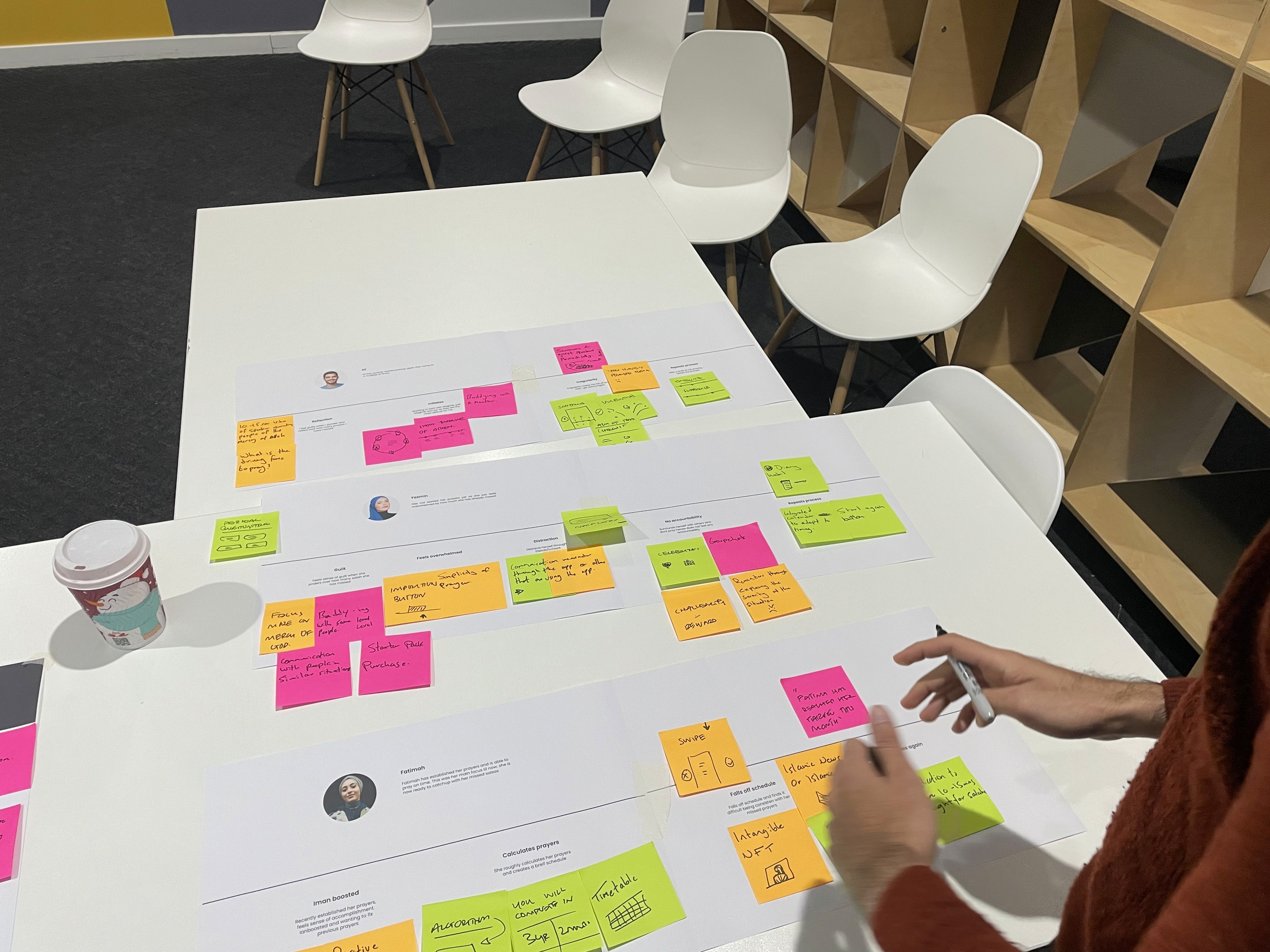
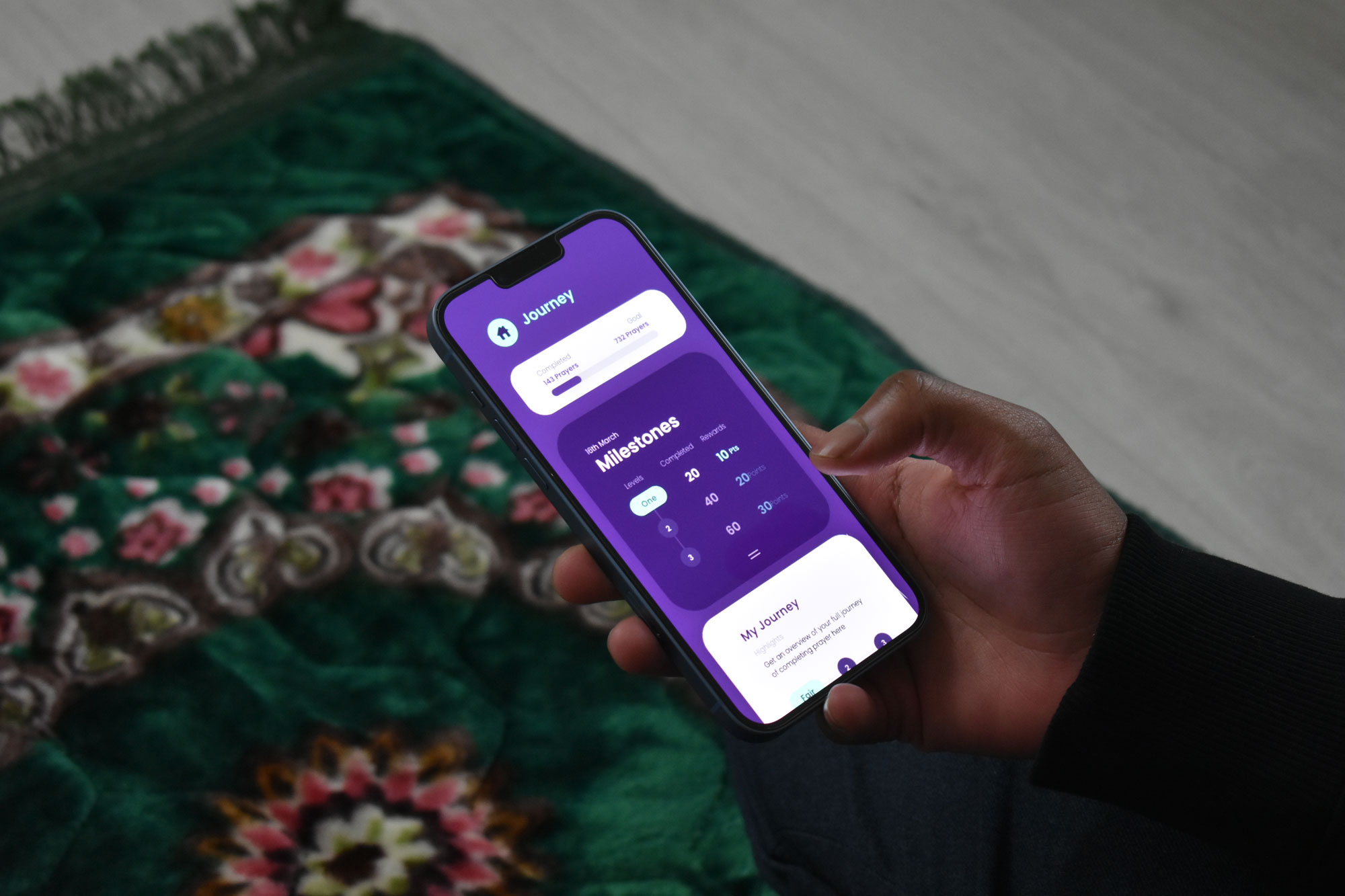
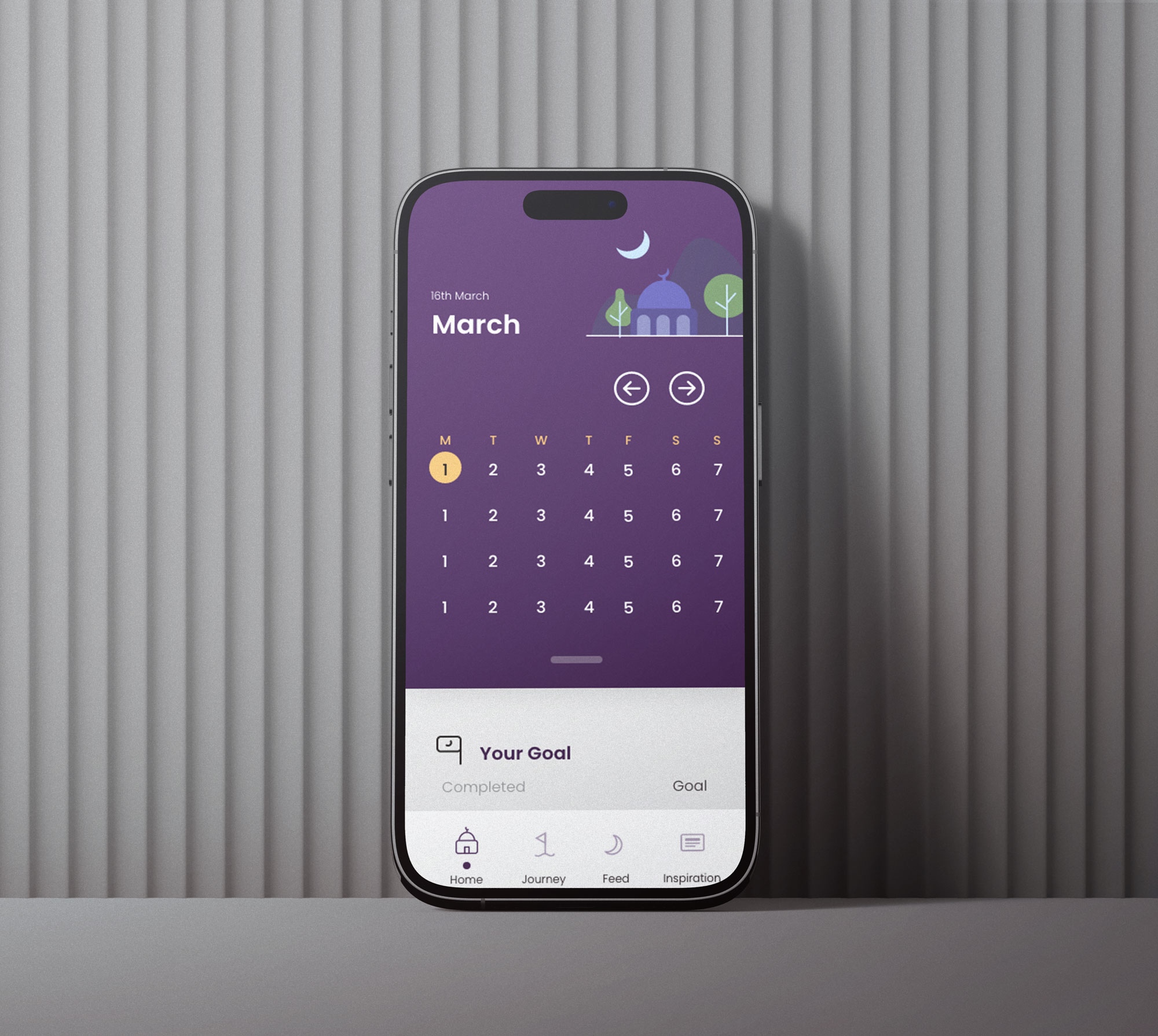
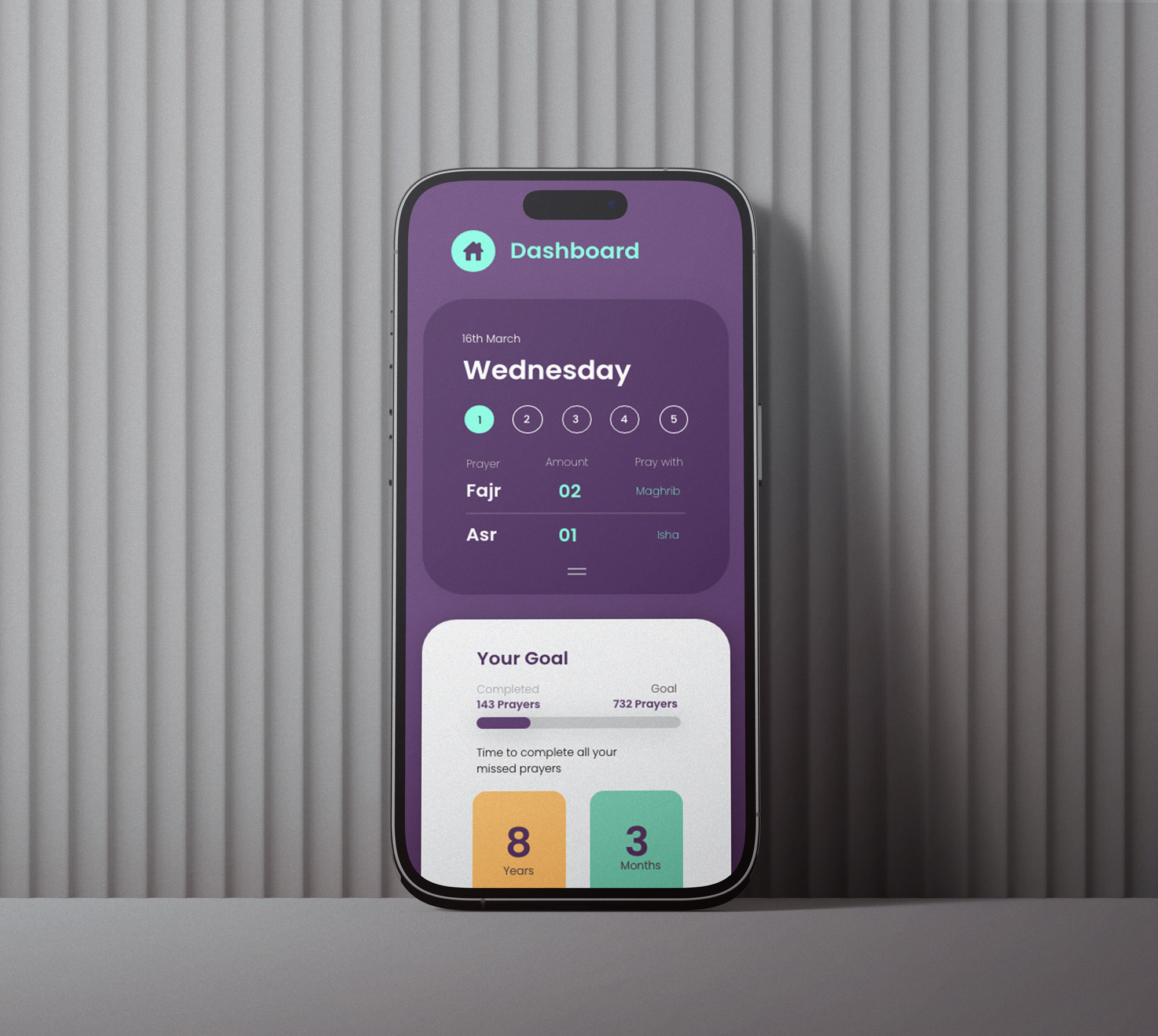
Following stakeholder review, the core navigation was restructured around two tabs: To-Do for missed prayers and Daily for current ones. This separation gave users a clearer mental model and reduced the friction of managing both at once. Early sketches evolved into a refined high-fidelity prototype that balanced functionality with a calm, focused visual tone.
Delivery
App focused on creating a community and helping each other
The app was designed around the idea that catching up on prayers is easier when you don't do it alone. Users can see when friends and family complete prayers, motivating them to do the same. A shared leaderboard and a rewards system using prayer mats rather than generic badges kept the experience rooted in faith rather than just habit tracking.
Validated demand and reduced prayer anxiety
79% of people said they would benefit from the app, and 88% said it would make them feel less anxious about their prayers. The research confirmed a genuine unmet need and validated the direction of the design.